Saturday, July 20, 2013

Trans Labrador Highway by MOTO

Voila, les voyages continuent...  The journeys continue:  Bip Bip you are gone but not forgotten.  In the spirit of continued travel here is a smaller adventure that took place between 26 June and 8 July 2013.

Feeling sorry that my F650GS DAKAR is imprisoned in the garage for these last two years, it was time to take it out and stretch its legs so to speak.  So what to do to merit the 'adventure' status this bike carries?  How bout 4000km loop up through Quebec and Labrador and finally to Newfoundland and again to revisit the Cabot Trail (see earlier in this blog for Fannys visit)  back to the starting point in Fredericton, NB.  The Trans-Labrador highway has been recently opened (2010) and there are still over 1000kms of gravel roads...


Nous avons frappé un barrage routier à Labrador City en raison des feux de forêt là-bas. Nous avons passé la nuit, mais avons eu la chance d'obtenir le dernier convoi parti le lendemain matin.  Vous pouvez regarder la reportage d'ici et nous voir a 1:10 and 1:59 minutes:

We hit a roadblock at Labrador City due to the forest fires there.  We spent the night, but were lucky to get the final convoy out the next morning.  You can catch us at 1:10 and 1:59 marks:
CBC NEWS Report- Fires Labrador City

oops...soft deep gravel and down you go.  Goings slow enough to run off the bike!

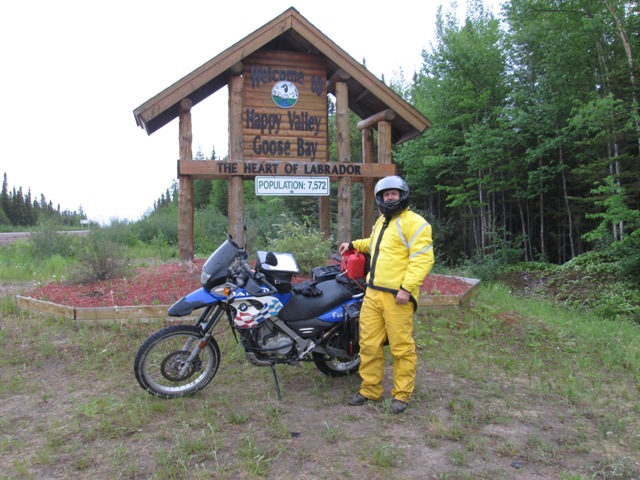
Cold and Rainy on arrival in GOOSE BAY Labrador

LIEN aux photos de Michael: Flickr McGarrett91


You can get the whole Ride Report from Michael here:My First Adventure...

Sunday, May 19, 2013

Nos bons plans Buenos Aires/ Our Non-Guidebook Guide to BA


Voilà une liste des endroits qui nous ont plu à BA.

This is it: the trip is over.  

Tomorrow morning we climb on the airplane and we jet back to the 'real world', to friends and family (good) and to work (bad).  Here is a list of places and activities we enjoyed during our transitional time in Buenos Aires that are not necessarily listed in the guidebooks.

Our apartment in Palermo was smack in the center of it ... every afternoon after our gym session we hit the town.  Hard.  We liked it.  

Danser le tango:
Il ne manque pas d'endroits pour danser le Tango à BA. La Viruta en est un. C'était près de chez nous et pour 40 pesos tu peux assister à un cours de Salsa, un cours de Tango et rester toute la nuit si tu veux. Ou bien t'installer à une table et regarder les gens danser. Même les boissons sont à un prix très raisonnables.

Dance the tango:  Not to miss out in Tango-land, La Viruta is the place where for 40 pesos you get lessons in Salsa and Tango (and a really really good place to pick up chicks!).  Later, after a few of the cheap alcoholic drinks you can watch the show.    Walking distance.


Manger une glace:
Les heladerias (magasins de glaces) sont omniprésents à BA.Il y a beaucoup de chaines mais on a préféré Cadore avec rien qu'une dizaine de choix de glaces au chocolat!

Eat Gelatto: seems that the locals are mad about ice cream and well, it is truly good.  It is so popular that there are a million different ice cream chains located at every street corner (like McDo in our land) but the best we gobbled was Cadore who, by the way, had a selection no less than 6 chocolate flavors  including Chocolate Mousse and Chocolate Cointreau.  Dude...


Boire une bière:
Cruzat Beer House et Buller brewing company sont des brasseries qui proposent des bières artisanales argentines. On a aimé la selection d'échantillons à Buller après avoir flâné dans le cimetière de la Recoleta et la terrase verdoyante de Cruzat et sa carte sans fin.

BEER:  The big city means available micro-brewery beer.  Check out the 'snack packs' at Cruzat Beer House and Buller brewing company.  After a trial run at Buller just TRY wandering around the cemetery at Recoleta or chill on the green and calm terrace de Cruzat where the beer list seems limitless. 
Buller brewing company
Cruzat Beer House
Ecouter de la musique live:  LIVE MUSIC:
Thelonious, un club de jazz. Possibilité de s'installer dans des fauteuils avec vue sur la scène. Sympa!

Jazz it in the classic interior of the Thelonious better yet, slouch on the couch -WITH a Fernet/Coke overlooking the band stand.

A quelques mètres de chez nous, Vicente el Absurdo passerait presque inaperçu mais il nous a tapé dans l'oeil un soir où il y avait un concert live. Depuis c'est devenu notre endroit préféré: jazz, samba brésilienne, tango... Petit prix et bonne musique.

Only meters from the apartment, Vicente el Absurdo is a hidden gem but there is something going on each evening.  Jazz or Samba live, or a course in Tango.  Never had a bad show.  Good food too.

Ambiance totalement différente à La Peña del Colorado mais tout aussi bonne. On y a été un dimanche soir, arrivés les premiers, le repas ne cassait vraiment pas des briques mais pas cher et le concert tardait+++ heureusement on a patienté parce que le concert était vraiment exceptionnel avec une très bonne ambiance. A 30 pesos la bouteille de vin de la maison one en a pris deux...

Going further afield - I am joking now since it is only 4 blocks from the apartment - the more upscale dinner and show of La Peña del Colorado is a live music to the ears place.  We arrived at 21hrs and wouldn't you know it - we were the FIRST to arrive to the 21h show!  Ah Argentina runs a different schedule.  Cheap traditional food and a bottle of wine for cheaper than a bottle of beer, er barman I'll take a second!  What is not to like???

Encore différent, le Teatro Colon pour de la musique classique. Ce qui est bon à savoir c'est que un ou deux dimanches matin par mois il y a un concert gratuit. Le théatre en soit est superbe. Pourquoi payer la visite pour entrer? Attention il faut récupérer les billets le vendredi pour le dimanche. Cela dit nous avons pu avoir des places le jour même.

Wanna go James Bond a la tux? Need high-brow a cultural outing? The Teatro Colon , built in the early 1900's is the place where the rich and snobby go rub shoulders.  Except on the special Sunday of the month when tickets are FREE for the poor and you get to watch a show in the ubber lux surroundings.  Reminds me of the Strasbourg Opera house.
Vicente el Absurdo

Teatro Colon

Manger une parilla:  OOOOHHHH BBQ: grill me two times baby:
Siga la vaca: pour la petite histoire, on a fait la traversée du Darien Gap avec le proprio de cette chaine de resto. Le concept du resto c'est que tu payes 122 pesos en semaine qui comprend un buffet de salade, de la viande en grillade et des légumes grillés le tout A VOLONTE + une boisson au choix (qui équivaut à une bouteille de vin PAR PERSONNE ou soda, bière par pichet) + un dessert?????
On ne s'en est pas privé! Et oui c'est super bon!

We met the owner while on our Panama-Cartegena sailing.  Rubin said we should come on by, that it was not to miss.  So we didn't miss it TWICE, ate so much at the all-you-can-eat meat buffet that was feeling drunk on protein for a week.   Is that even possible?  Probably expensive by local rates at 122 pesos for the full meal deal, but our blue-dollar exchange on the greenback meant that the bill - grill bar, salad bar, bottle of wine and desert  all included - came to 12 DOLLARS. Each.  Sadly this cheap date did not end in sex...who can move with all that food stuffed inside??? Siga la vaca the ubber favorite of BA.


Manger des sushi:  Sushi - me:
Un autre bon plan bouffe et une envie de sushi? A Behihana, il y a happy hours entre 16h et 20h chaque jour avec boissons et sushi à moitié prix.

No get this...we ate  so much sushi that Fanny said "enough".  For years she had been complaining we only eat pizza.  Pizza, pizza, pizza.  Our nearby (ok we had to walk 15 minutes) Behihana has a daily (DAILY) happy hour that gets you rolls at HALF price.  Who can resist?  We sure didn't.


Encore faim? Urp - wanna go to another restaurant?
Las Cortaderas est un bon resto avec du jazz en live le vendredi et samedi soir. Bonne musique + bonne bouffe = bonne soirée

Las Cortaderas, only a few blocks away provided a very nice dinner and show.  Well done Jazz performed by a local groups Friday and Saturday nights.  Why leave Buenos Aires???


Boire un thé:
Tea Connection est un endroit parfait pour boire un bon thé après une balade au jardin japonais.

Coffee?  You can get great coffee anywhere - INCLUDING the equivalent of 7-11 and corner kiosk snack shops.  But the Tea Connection is where Fanny got to savor a selection of tea to make the Chinese quiver.  Oh and the chocolate brownie that came as a side was THE BEST brownie in the world.  Walk off your orgasm at the nearby Japanese Garden.


Informations pratiques:  Clues and Treats:


Changer de l'argent:
Ce qui nous a permis de vraiment passer du bon temps à BA en plus du fait qu'on avait pas de location à payer, c'est le taux d'échange du dollar au marché noir. Sur le site du dolar blue, vous donne le taux d'échange officiel et celui du marché noir en tant réel. On a pu changer nos dollars entre 8,3 et 9,5 pour 1 peso alors que le taux officiel est à environ 5,1. Pas mal d'économie hein?

Change Money
While you can change on the street at Calle Floride (sketchy) we found a place acting as a false front 'tour agency' complete with photo of the Eiffel Tower on the blacked out window and plastic phony computer on the plastic phony desk. Ring the bell, wave at the camera and say the magic code at the Green door.  Check out dolar blue for the latest rate and go get your money.  Official exchange rate is 5.1 peso per dollar and we got 9,5 (DollarBlue 9,8).  The DollarBlue topped out at 10,5 last week and is currently just under 9 now.  Caused sufficient stress that the local TV news reported on the increasing local money exchanging activities.

Trouver un restaurant:
Pour trouver un resto selon vos envies et votre quartier voici le Guia Oleo l'équivalent de Trip Advisor juste pour Buenos Aires.

Find a restaurant:  check Guia Oleo out for finding out hidden spots specifically in Buenos Aires

Se déplacer à BA:
Au fait, comment se déplacer à BA? Il y a un super bon réseau de bus et quelques lignes de métro et c'est très bon marché mais pour le bus il faut bien se préparer car les arrêts de bus n'ont pas de nom et ne sont pas clairement indiqués ni sur le site web ni sur le guia T. Heureusement il y a un arrêt tous les 2-3 pâtés de maisons.

Nous avons opté pour l'achat d'une carte Sube à 15 pesos qui est valable pour autant de personnes que nous le souhaitons et que nous avons obtenu dans un bureau de poste avec un passeport et il y a de nombreux point dans la ville pour la recharger (notamment dans le métro). Ensuite vous indiquez l'endroit où vous descendez au chauffeur et il vous débite la somme voulu.

Pour trouver quel bus vous emmène à la destination voulu le site web omnilineas ou le Guia T disponible dans les kiosques à journaux.

Gettin' Around:
Turns out, when you figure out the system, getting around by bus or metro is the way to go.  You see, the bus stops are NOT announced and if you are not watching...adios amigo.  Then TRY to find the bus stop you want...  Still, a bus trip costs 1,6 pesos!  

The way to go is to pick up a debit card carte Sube for the price of 15 pesos and get it recharged as you need.  It is valuable to the owner but you can travel in a group and use the same card, no problem. You can pick up the Sube at a branch of the Correo with your passport ID.

A way to FIND your bus is to visit omnilineas or buy the hardcopy Guia T for 12 pesos at any newspaper kiosk. Then spend the next 4 hours trying to figure out the system - kinda like the Indian train schedule, dammit.

Enfin pour aller à l'aéroport, nous avons choisi de prendre le taxi blanc (195 pesos en réservant par internet)car à deux çà revient moi cher que le shuttle. Biensur il y a toujours la possibilité de prendre le bus mais c'est 2 fois plus long et pas toujours très pratique avec des valises...

Getting around from or to the AIRPORT is easy with the  taxi blanc. At 195 pesos (with online reservation) you get door-to-door service that works out way cheaper than paying two seats in the airport shuttle bus; IF you can FIND where the shuttle hubs are...


Tuesday, April 30, 2013

PAN AM Learning Lessons


Sitting here sharing an evening with another overlanding couple, the conversation naturally turns to the highlights and low-lights of the last 2 years of voyaging between Canada and Argentina.  There is a random staccato of ideas and methodologies to possibly make for a smoother trip resounding over the dinner table.  So for future PanAm overlanders, here is what I learned:

1.  START at the end.  What this is to mean is that it would have been more fun to finally arrive at ‘home’ rather than arriving at the ‘end of the world’ and THEN have to face the stresses and concomitant costs inherent with either selling the vehicle or shipping the vehicle back home.  Particularly as the trip winds down and overlanding-fatigue sets in how much nicer is it to have in the light at the end of the tunnel to be an anticipated arrival with your family?

Speaking of overland fatigue; imagine running out of time or money or motivation, it is always easier to make a decision to ‘skip’ a country by considering visiting ‘another time’.  Not so easy living in Canada to visit Argentina another time, but the nearby USA is possible.

Finally, it is so much easier to arrange for shipping your vehicle from Canada (Europe) to Argentina in your native language then it is to undertake finding and coordinating a container share or risking RoRo shipping FROM Argentina.  Furthermore since most Overlanders are looking to offload their expedition tested and proved rig in Ushuaia/Buenos Aires there is a reasonable choice in vehicle should you opt to buy in-situ rather than ship your car.

The down-side is that it is a rather large ‘culture shock’ to arrive in Argentina, buy a car and start the trip as you are far from home in a foreign environment with not much nearby familial support.  Our time travelling the USA and Mexico was a great ‘shakedown’ opportunity and permitted to resolve problems closer to home before diving deeper into the PanAm.

2.  Learn Spanish. Nothing makes life on the road and enhances local contact and by extension the ‘experience’ with a capacity to say more than Si or No.

3.  Go on, take a VACATION!  Well since travelling is such a stress, it is good to schedule a ‘vacation’ from your vacation to reconnect with family and friends at some regular interval– 2 years on the road is a long time to be away.  But mostly, it is a way to transport all the stuff home that you THOUGHT you needed, and return with the things you actually DO need.   Maybe you DO have space for that gas-powered tailgate mounted Margarita mixer???

4.  Vehicle Choice.  There are a million choices on what vehicle to take, and every decision is predicated on ‘needs’ and ‘wants’ of the Overlanders – who often find difficult to distinguish between need and want.  Or more predictably in their excitement of the impending trip, spend too much time trying to resolve solutions to potential problems which never actually arrive (while the unexpected always do).  North American vehicles (both NA brands and NA Japanese brands) are globally a poor choice for Overlanders for a mitt-full of reasons– but it is what we have to work with.

I might suggest the best vehicle for the PANAM would be a Japanese vehicle over 10 years old.  Older is better than newer as older vehicles are less ‘mission dependent’ on electronics, are more familiar to mechanics in the regions being traversed and have relatively easy access to parts. 

North American brands are rare and can only be found in scattered countries along the PANAM and are SUFFICIENTLY different from so called local ‘third-world models’ that engines are frequently different as well as most of the critical parts.  Similarly North American models of Japanese vehicles are also different from these ‘third-world’ vehicles found south of the US/Mex border.  Case in point:  I actually got turned away from Mitsubishi dealerships in Nicaragua and Costa Rica flatly as they believed my van was a North American model, they would not touch it.  No discussion.

Ultimately too much time is invested in mulling over the vehicle choice.  The best solution is to move your current vehicle out of the garage, fill the tank and GO!

5.  Discretion is the better part of Valor.   A vehicle that carries all your possessions and dreams should not stir the interest and dreams of the locals and more importantly the local hoodlums.  A plain, white panel van is the way to go, or at least a vehicle as common as possible to blend into the scenery.

One thing that Bippers was NOT was discrete.  On one hand we loved having people come by for a chat and gawk on Bip Bip.  This opened channels of contact with the locals.  In fact, Bip Bip was SO flashy that we believe it actually provided security as nothing went unnoticed around Bip Bip.  Furthermore, the Right-Hand drive drew lots of interest but since it was such a confused concept to the local psyche, no one could consequently conceive of stealing the van. 

It was, on the other hand, tiring to answer the same questions time and again and, more importantly, extremely tiring to worry at every Police and Military checkpoint to have to ‘inspect’ the van or to play the rich-tourist-backsheesh game.  Low key is better we learned.

6.  Buy as cheap as possible.  Best to go as simple and inexpensive as possible.  Read: better buy a 1990 Isuzu Rodeo for $2500 than a 2010 Toyota FJ for $30 000+.  You can be assured that both will break down on the trip and shipping parts for the FJ would be an additional stress and expense.

We often spend years dreaming about the trip, planning and re-planning  mulling over vehicle choice...a van or a SUV or a pick-up, camper or roof-top-tent, toilet or no, ARB fridge or not...the permutations are endless.  Keep it simple, KISS, has always and will always be a sound principle. The more complicated the rig, the more probability of having some sort of 'mission ending' failure.

Ultimately, when the vehicle gives up its last gasp and shutters to a stop in the middle of some inhabited wasteland you are free to ‘shoot the horse’ and move on with your life.

Those of us who poured our soul in our car, constructed and invested in the dream, and truly over-designed solutions for every eventuality  - while we enjoyed and were positively occupied during the pre-trip preparation -  are so invested that it is nearly impossible to take the final and objective decision to part ways with your ride at the appropriate time.  

The moral of the story is JUST GO – fill the tank of the car in your garage and stick it in drive.  Forget trying to fabricate the 'perfect overlander machine'. These exist only in our dreams and maybe in Europe as North American car companies do not even have a basic concept in this market.

7.  Smaller is better than bigger. Having smaller vehicle meant that we got to traverse the narrow roads of Guatemalan villages without too much stress.  We got to park in regular parking spots – even sleep in the car in the Zocalo (Town Square) overnight.  Ultimately travelling as low-key and discrete as possible helps security but also means less questioning at Police and Military Checkpoints.

Finally having a small light 4x4 van meant we spent a whole lot of time visiting places otherwise inaccessible to the larger, heavier and more top-heavy unstable vehicles.  We found that we had more fun and interesting visits to ‘off road’ sites rather than an endless series of town center Cathedrals.

8.  Interior Space.  On the other hand, going small means ‘living beside’ rather than ‘living inside’ your rig.  We lived beside our van for over a year without having any complaint.  Then we got to Ecuador and started climbing higher in elevation.  Days of rain or wind (and even snow) meant we had to find indoor protection.  Living in our van gave us the minimum interior space possible to pass long days.  We learned that these cold windy rainy days would have been hard to take in a tent... so having at least a minimum space in our van meant at least a minimum of comfort.  We appreciated this.
  • Permanent Bed.  We learned that having a permanent bed was indispensable   It meant that after a long day of driving we didn't have to reconstruct the bed to sleep.  It also meant we could use it at any time we wanted.  It meant that the mattress was a dedicated mattress and thus much more comfortable than a collection of seat cushions.  Ultimately it meant we could have sheets and blankets and pillows like grown-ups.  From a security point of view, our permanent bed meant we had secure, locked storage underneath which prevented any smash-and-grab hoodlums from having access to our stuff.
  • Security.  Having inside space in the van meant we could live and boondock in relatively open environments in security.  We thus could sleep in town squares or in parking lots or in gas stations without risk of being noticed as sleeping inside (au contraire to having a roof-top tent  up).  Boondocking meant we could reduce our daily expenses by not renting hotels (or the other risk of parking the van unaccompanied on the street).
9.  Wrench-it!  Learn how to use a wrench and know the basics of mechanics.  I can say that just about every mechanical problem we had related directly to the (poor) work of the previous mechanic.  Every visit resulted in at at least three more visits to resolve the add-on issues.  This got to be such an irritating domino effect that I finally just gave up on mechanics and did all the work myself. 

10.  Range.  I would have appreciated a vehicle that gives at least 800km (preferably 1000km) on a tank.  You never know when the next gas shortage is (read : Uyuni)...or just how far it is to cross the Bolivian South-West Circuit.

11. Lay off the Gas!  I wanted a diesel powered van before we left.  We all believe that the diesel engine is the way to go, however we got lucky:  it turns out that our gasoline engine helped us on this Pan Am trip.  While we had slightly less fuel economy, we got a more powerful engine that was quieter and had greater access to local spare parts.  More than that, we did not suffer excessive power losses when over 3000 m elevations (common to many naturally aspirated diesel engines, and some like the Izuzu diesel actually goes into limp mode at 3000m I hear!). Nor did we suffer any issues with fuel quality as we heard our colleagues had while in Peru and Bolivia.

12.  Toilet and Shower?  We didn’t have a toilet; and it never became an issue.  Except in moments of intestinal distress, there are ways to work around not having a toilet.

A shower however – though relatively easy to source on the PanAm – would have been nice.  The truth is that inside showers are generally not used by most caravaners due to moisture and humidity it creates so an outdoor shower (with hot water) would have been nice in a pinch.  Downside means having to carry water which increases weight and thus stresses on the already overloaded vehicle chassis but also increases fuel consumption.  Another downside might be that trying to have an outdoor shower on the Altiplano, at 5000m elevation, in full gale-force winds would have been relatively challenging.

You can get showers at trucks stops or gas stations in Canada, USA, Peru, Chile and Argentina and I am sure the other countries.  In Central America paying for the odd campsite or hotel will not break the bank (and besides all that time on the beach who needs a shower???)

13 Brrrr Coooold.  Skip the fridge - we spent almost 2 years and never felt at a loss for not having a fridge.  It is a big investment that gobbles storage space in the truck and makes you electronically dependent- thus you need a big investment in solar electricity, or run the engine to charge the batteries or find a way to plug in (ie paid camping).  Costs nothing to stop and stop every couple of days for food and gives you a reason to mingle with the locals.  You can throw away tonnes of spoiled food before you match the price of an Engel or ARB fridge.  Ultimately this is not Africa where you can go weeks between (empty) markets.  And if you need that ice-cold beer - do happy hour at a beachside bar.


14.  Document Management.   Make good scans and color printout of all the important documents – Driver’s License, Passport, Vehicle Registration.  Never give your real documents to Mexican or Central American cops.  If they demand the originals then you KNOW that they are trying to hold you hostage to some false accusation.  The response is to offer to show the original documents AT the police station.  This will end any further discussion as the cops do not want to be ‘outed’ at the station for trying to rip-off a tourist.

Second to this, make 20 copies of the DL, Passport and Registration along with the originals and put them in separate pockets/sleeves in a binder.  When you go into a Central American border post you will look organized and prepared and that, in itself,  will limit phony ‘fees’ charged.  Central American customs guys seem to love copies so better to be prepared than have to run around making copies (to the profit of the copy guys because to be realistic the customs guys don’t really need or care for the copies...).


Other Interesting Reading:


Resources

Friday, April 26, 2013

Argentina Top to Tip / Du sud au nord, Argentine


Après quelques jours à Ushuaïa, il était temps de remonter et de penser sérieusement à notre retour. Nous nous sommes donc concentrés sur la vente de Bip Bip ou éventuellement son expédition par bateau au Canada.

After a couple of (cold) days in Ushuaia it was time to start figuring out what to do about our return.  We redoubled our efforts in selling Bip Bip and we started research on sending Bippers back to Canada by boat.

Nous avons roulé tranquillement vers le nord sur la route 3, des centaines et des centaines de km ennuyeux au milieux de la pampa. Cependant, nous nous sommes arrêtés pour visiter une colonie de pingouins au moment où les bébés approchaient la maturité et étaient dans le dernier stade de la mue presque prêts à partir de la maison.

We started working our way northward along Ruta 3, a long and flat and long stretch of Pampa.  We were able to stop along the way to visit the Penguin colonies as the babies approached maturity and were in the final stages of moulting and moving out of home.   

En continuant plus au nord, nous avons été récompensés par des températures plus chaudes. Une longue route sinueuse en gravier nous a mené à travers la pampa jusqu'à deux bosques petrificados (forêts pétrifiés). Bon bivouac, bon climat, et incroyable phénomène natural ont fait que ce détour valait la peine.

Moving northward we were rewarded with warmer temperatures.  A long gravel road winding through the pampa took us into the wild center where we visited 2 of the national parks that protect el bosque petrificado - the petrified forest.  Great boondocking, great weather and cool natural phenomenons made this a worthy side trip.

Encore plus au nord, nous avons été attrapé au milieu de la foule du week-end de pâques et nous sommes restés coincés dans les bouchons en traversant Buenos Aires en ayant vaguement en tête l'idée de visiter le Paraguay et l'Uruguay. Nous en avions eu de bons échos et sans avoir d'idée fixe sur la façon dont nous allions gérer Bip Bip, nous tendions de plus en plus vers l'envoi du véhicule à partir du Brésil. La circulation était tellement mauvaise, nous avons finalement décidé de nous arrêter dans la petite ville de Colon et de camper sur la plage herbeuse au bord de la rivière Uruguay faisant face à l'Uruguay lui même. Nous avons constaté que nous captions le WIFI de l'hôtel d'à côté et c'est ici que nous avons finalisé la vente de Bip Bip.

Travelling nothward still, we got caught in Semana Santa, Easter week, crowds and found ourselves nose-to-tail in traffic as we traversed across Buenos Aires; still heading northward with vague ideas of visiting Uruguay and Paraguay.  We had heard some great things and without a fixed idea of how to deal with Bippers and an increasing likelihood of shipping out of Brazil we meandered northward.  The crowds and traffic was too much to deal with so we finally we decided to bunker down in a small village of Colon bivouacing on the grassy beach on the Uruguay River facing Uruguay itself.  We found we had WiFi from a nearby hotel and it was there we finallized the sale of Bip Bip.

Cela a changé nos plans et nous a donné une date limite. Donc avec le nombre de jours qui nous restait, nous avons calculé que nous pourrions faire la course jusqu'aux chutes d'Iguazu, car en réalité ce n'était que quelques centimètres sur notre carte... Nous avions anticipé une opportunité de bivouac au parc national El Palmar que nous avons oublié à la vue de la queue sur l'autoroute à l'entrée du parc. A faire au retour! Presque 1000km après nous sommes arrivés aux chutes. Durant cette course vers les chutes, nous avons traversé le département de Entre Rios. Visiblement plus pauvre que le reste du pays. Et voilà nous avons été harcelés par la police corrompu pour la première fois depuis l'Honduras. Nous avons eu une amende mais n'avons pas payé le prix réduit sur place en liquide.... Il y avait une étrange conversion du montant de l'amende en nombre de litres d'essence qui nous embrouille encore un peu.
A la fin, nous n'avons pas du tout payé l'amende. Quel moment désagréable dans un pays autrement merveilleux.

This changed our plans and gave us a deadline.  So with our remaining days we calculated we could make the run to the Falls at Iguazu, since really it was only a couple of inches away on our map!  We anticipated a bivouac opportunity at the NP El Palmar only to see the Samana Santa crowds backed up several kms along the highway to enter the park.  Skip for the return.  Almost 1000kms later we made it to Iguazu.  In running this gauntlet towards the falls we also ran the gauntlet of the state of ENTRE RIOS.  A visually poor part of the country seeming closer to Honduras than the Argentina we had experienced.  And voila...we got hassled by the corrupt coppers suddenly and shockingly for the first time SINCE Honduras.  I got a ticket but didn't pay their proposed discounted fine insitu.  There was some funny business of converting the 'fine' into litres of gasoline that still has me confused.  In the end, did not have to pay the phoney ticket.  What a distasteful moment in an otherwise wonderful country.

Iguazu est à la frontière de l'Argentine, du Brésil et du Paraguay. Ce qui signifie près de la jungle soit chaud, pluvieux, humide et plein d'insectes. Cela faisait une éternité que nous n'avions pas connu ce type de climat. Nous étions contents d'avoir la clim dans Bip Bip puisque nous avions passé les 5 derniers mois en jeans et pull-overs et n'étions pas habitué à ce type de climat.

Iguazu is on the border of Argentina, Brazil and Paraguay.  Meaning it is close to the jungle and it was HOT and RAINY and MUGGY and BUGGY.  It had been ages since we had this kind of weather and we were happy to have AC in Bippers as our last 5 months we have been in jeans and sweaters and were in no way accustomed to the steamy weather.


Nous sommes maintenant installés dans notre appartement à Buenos Aires. Nous sommes dans la "phase de transition" de notre voyage ce qui signifie que nous sommes transition entre notre vie dans Bip Bip et Paris. Nous pouvons maintenant de découvrir Buenos Aires ... On vous racontera!


We are now settled in our apartment in Buenos Aires.   We are in the 'Transition" phase of our trip meaning we are transitioning between our life in Bippers and the 'real world'.  We now get to experience Buenos Aires...keep in touch.